
Garage Door Spring Repair Canoga Park CA | Torsion & Extension Springs

Same-Day Smart Gate Upgrades by Licensed Gate Technicians Near You


Rating: 4.9/5 · 1,246 Reviews
Rated 5 out of 5

Request A Free quote for electric gate repair!

Reliable, Experienced, Certified Premier Technicians.

Request Free Pricing Today for Your Electric Gate Repair In Santa Monica!

HeroTec Inc. provides garage door spring repair in Canoga Park, CA. Our work covers snapped torsion springs, broken extension coils, and full system rebalancing. We serve homeowners across ZIP codes 91303 and 91304. Urgent calls are dispatched within 30 to 60 minutes. Every job is flat-rate quoted before work begins.

Our team carries a full range of spring sizes and cycle-life ratings on the service trucks. Every fix carries a 12-month parts-and-labor warranty. Most repairs are completed on the first visit thanks to a stocked inventory.

Call 747-777-4667 to book garage door spring repair in Canoga Park today.

Why Canoga Park Homeowners Trust HeroTec for Spring Repair

Canoga Park homeowners trust HeroTec for spring repair because a snapped coil is one of the more dangerous garage door failures. Our licensed team handles the tension safely and finishes most jobs the same day.

  • Licensed and insured contractor: California C-61/D28 license #1098568, plus $1M/$2M general liability coverage per job.
  • Certified across major systems: Our team completes factory training on LiftMaster, DoorKing, and Viking systems used across garage door setups.
  • Same-day dispatch across the West Valley: Emergency calls get a technician on-site within 30 to 60 minutes.
  • Written flat-rate quote up front: You see the price before work starts, with no evening or weekend surcharge added.
  • Loaded truck inventory: Torsion springs, extension coils, cables, and safety hardware are stocked so most repairs finish in one trip.
  • 12-month workmanship guarantee: Every spring repair carries a full one-year warranty on both labor and materials.
  • Full safety check on every visit: Cables, drums, hinges, and rollers are inspected before we call the job complete.


You can contact us today for a fast on-site inspection.
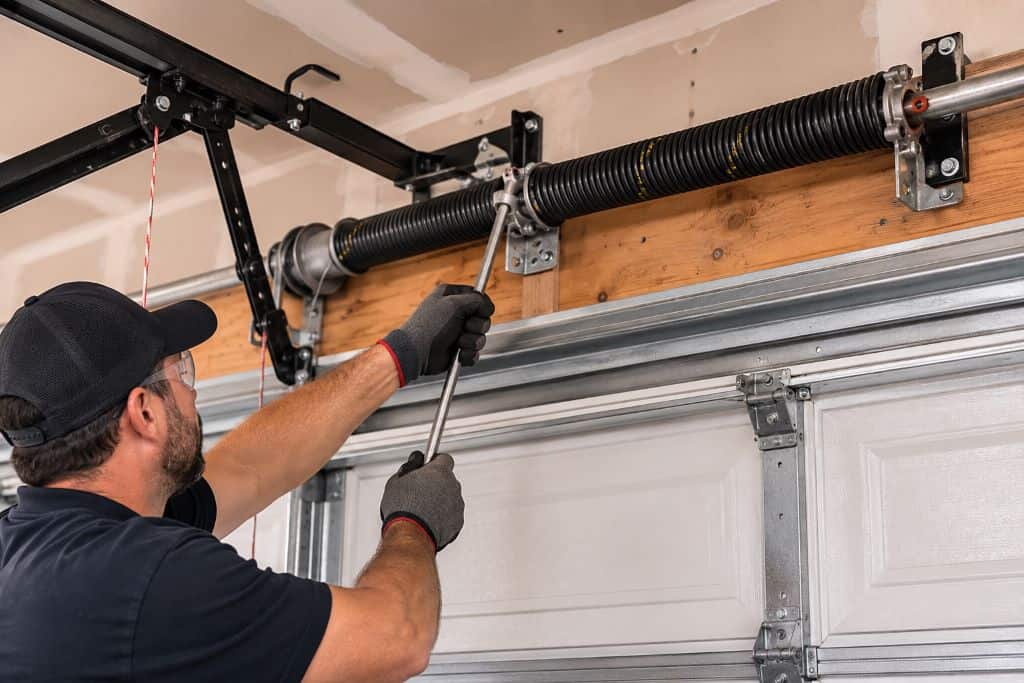
Technician adjusting a garage door torsion spring during residential spring repair in Canoga Park.

Signs Your Garage Door Spring Is Failing

Signs your garage door spring is failing include heavy lifting, uneven movement, coil gaps, or a loud bang. Most spring problems become emergencies within a few days if left alone.

  • Loud bang from the garage: One snapped torsion spring sounds like a gunshot inside your garage. Check the coil above your door for any visible gap.
  • Door feels much heavier than usual: With a failed spring, your door’s full weight rests on the opener motor. Manual lifting becomes near-impossible.
  • Gaps between spring coils: A healthy spring has tight, even coils. Visible spacing between loops points to a broken section that hides at first glance.
  • Uneven door movement: One side lifts higher than the other. This shows a broken spring on the two-spring system where one still works.
  • Door reverses or gets stuck halfway: Your opener senses excess weight and stops the cycle for safety. That safety feature protects the motor from burnout.
  • Loud rattling or scraping: Cables that jumped off drums after the spring break make a rattling sound during any attempted movement.
  • Cables hanging loose: One snapped spring often takes a cable off its drum. Loose cable ends show at the top corners of your door.


Call (747)-777-4667 for a same-day spring diagnosis.

Torsion vs. Extension Springs Explained

Torsion and extension springs both support your garage door weight but work in different ways. Torsion springs are mounted above the door and use a twisting force. Extension springs stretch along horizontal tracks when the door closes.

  • Torsion springs: Mounted on a metal shaft above the door opening, torsion coils wind tight when closed and unwind to lift. Most modern doors use torsion setups.
  • Extension springs: Mounted along horizontal ceiling tracks on either side of the door, extension coils stretch under load and contract to lift. Older residential doors often still have extension setups.
  • Safety cables in extension systems: Extension coils must have internal safety cables that catch the assembly if it snaps mid-cycle. This is a California safety requirement.
  • Wire gauge and inside diameter: Torsion springs are matched to your door by wire thickness and coil diameter. Wrong sizing shortens spring life fast.
  • Wind direction: Torsion springs come left-wound or right-wound depending on the drum they pair with. Installing the wrong wind is a common DIY mistake.
  • Number of springs per door: Single-car doors often use one spring, while two-car versions typically pair a set of coils. Two-spring systems balance heavier doors more evenly.


For issues touching cables, tracks, or panels along with the springs, our LA garage door repair team handles complete rebuilds.

Call 747-777-4667 for spring type verification on your garage door.

What a Full Spring Repair Includes

Full spring repair includes replacing one broken coil, checking the assembly, and rebalancing your door before we leave. During each visit, our team of trained technicians checks tension, cables, drums, and hardware for related damage.

  • Broken spring removal: The snapped coil is removed using proper winding bars and safety gear.
  • Matched replacement install: The replacement is sized to the door’s weight, gauge, and cycle count.
  • Cable and drum check: Cables get inspected for fraying, while drums are checked for cracks from the extra load.
  • Bearing plate and shaft review: End bearings and torsion shaft are examined for damage caused by the failure.
  • Balance test: The door is lifted halfway by hand. A balanced one stays in place, while an unbalanced door falls or rises on its own.
  • Force calibration: The opener force settings get retuned to match new spring tension.
  • Safety check: Photo eyes, sensing edges, and manual release are tested to confirm safe operation.


A short pre-visit photo helps our technician bring the correct spring size. Text one photo to 747-777-4667 for a faster diagnosis.

What a Full Spring Repair Includes

Full spring repair includes replacing one broken coil, checking the assembly, and rebalancing your door before we leave. During each visit, our team of trained technicians checks tension, cables, drums, and hardware for related damage.

  • Broken spring removal: The snapped coil is removed using proper winding bars and safety gear.
  • Matched replacement install: The replacement is sized to the door’s weight, gauge, and cycle count.
  • Cable and drum check: Cables get inspected for fraying, while drums are checked for cracks from the extra load.
  • Bearing plate and shaft review: End bearings and torsion shaft are examined for damage caused by the failure.
  • Balance test: The door is lifted halfway by hand. A balanced one stays in place, while an unbalanced door falls or rises on its own.
  • Force calibration: The opener force settings get retuned to match new spring tension.
  • Safety check: Photo eyes, sensing edges, and manual release are tested to confirm safe operation.


A short pre-visit photo helps our technician bring the correct spring size. Text one photo to 747-777-4667 for a faster diagnosis.

Why Broken Springs Are Never a DIY Job

Broken garage door springs are never a DIY job because the coil holds enough stored energy to cause serious injury. Even a small mistake with the winding bar sends that coil flying at high speed.

  • Stored spring tension is dangerous: Wound torsion springs hold hundreds of pounds in force. Releasing that force incorrectly causes deep cuts or broken bones.
  • Winding bars need training: The bars used to tension a torsion spring must be sized and gripped one specific way. One slipped bar becomes a projectile.
  • Wire gauge and size must match: Installing an oversized or undersized spring fails within weeks and voids most opener warranties.
  • Cable and drum work is paired: A spring change often needs cable rethreading and drum retensioning. Getting one part wrong causes cascading damage.
  • Balance testing takes practice: A properly balanced door is safe. An unbalanced one puts extra load on the opener and shortens motor life.
  • California codes require inspection: UL 325 safety rules apply after any tension-system change. A licensed technician confirms compliance on the same visit.


Call 747-777-4667 to book a licensed spring repair visit.

What Affects the Cost of Spring Repair in Canoga Park

Several factors shift the cost of spring repair in Canoga Park. Spring type, wire gauge, cycle rating, door weight, and how many other parts need replacement all affect the total.

  • Spring type: Extension springs typically cost less than torsion coils. Higher-cycle torsion springs cost more but last much longer.
  • Wire gauge and length: Thicker wire and longer springs cost more per unit. Heavier doors need thicker coils.
  • Cycle rating: Standard springs are rated for 10,000 cycles. Higher-cycle versions reach 20,000, 25,000, or 30,000 cycles at a higher price.
  • Single or double spring: A two-spring replacement costs more up front. Replacing both at once saves labor later since the second spring often fails soon after.
  • Cable or drum damage: Snapped springs often damage related parts. Replacement cables or drums add line items to the quote.
  • Opener recalibration: Force settings need retuning after new springs install. This is a small charge included on most jobs.
  • Emergency response add-on: Same-day or next-day dispatch is included at no extra charge. That covers weekends and holidays too.


Call 747-777-4667 for a written spring repair quote.
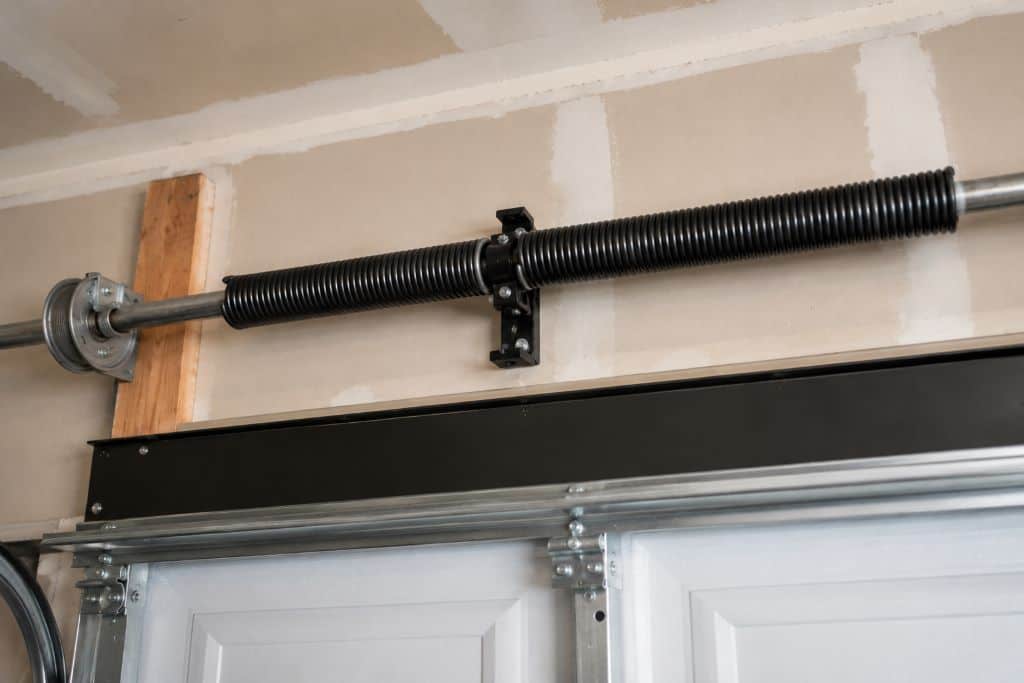
Close-up of a residential garage door torsion spring mounted above the garage door in Canoga Park.

Why Canoga Park Homes See Faster Spring Failure

Canoga Park homes see faster spring failure because of high daily cycle counts on multi-car garages. Big temperature swings and older tract housing with original coils also shorten service life. Each factor adds up to earlier replacement than in cooler coastal areas.

  • Two-car and three-car garages: Many midcentury homes on Roscoe Boulevard, Nordhoff Street, and Alabama Avenue have multi-bay garages. Higher daily use reaches the 10,000-cycle rating sooner than single-car setups.
  • Big daily temperature swings: West Valley days often reach hot afternoons, followed by cool evenings. Metal fatigue in the spring speeds up under repeated expansion and contraction.
  • Older housing stock with original springs: Homes built in the 1950s and 1960s along Costanso Street still have single-spring setups. Age plus the 10,000-cycle standard rating means many are past due for replacement.
  • Multi-story homes with heavier doors: Multi-story homes often use larger, heavier garage doors that demand thicker gauge springs. Undersized springs from earlier repairs fail early.
  • Attached garages with living space above: Living areas above the garage require quieter, better-balanced doors. Balance issues from tired springs get noticed sooner in these homes.


Scheduling annual visits through our garage and gate maintenance plans catches spring fatigue before a snap strands you outside.

Call 747-777-4667 to book a spring inspection.

Book Your Canoga Park Garage Door Spring Repair

Booking garage door spring repair in Canoga Park with HeroTec gives you one licensed technician plus a written flat-rate quote. Most jobs finish the same day thanks to loaded trucks. Our crew rolls out from 21050 Kittridge Street and covers every neighborhood across the west San Fernando Valley.

For larger spring replacements or full-system upgrades, our financing keeps the cost easy to manage. Approved applicants pick a 3, 6, 12, or 18-month payback plan. Interest kicks in only after the first four months pass. Our online financing application takes under one minute with a soft credit pull.

Call (747) 777-4667 or text a photo of your snapped spring for faster service.

Related Canoga Park Services

Testimonials

Testimonials

FAQs

Frequently Asked Questions

How long does a garage door spring last?

Most garage door springs last 7 to 10 years or about 10,000 cycles on standard grade. Each cycle counts as one full open and close motion. Higher-cycle springs rated at 20,000 or 30,000 cycles can last 15 to 20 years on average use. Our team can install higher-cycle upgrades during any spring visit to Canoga Park.

Yes, most technicians recommend replacing both springs when one snaps on a two-spring system. Both springs age at the same rate and reach failure within months of each other. Replacing both together saves a second labor call. Our team quotes both options during your on-site visit.

No, opening the garage door manually with a broken spring is not safe. The full door weight rests on your hands and back with no counterbalance. That weight often exceeds 200 pounds on standard steel doors. Call for professional service before attempting any manual operation.

Yes, Canoga Park’s daily temperature swings between hot afternoons and cool evenings shorten spring life. Metal fatigue occurs more quickly under repeated expansion and contraction cycles. West Valley homes see more year-round swings than coastal Los Angeles neighborhoods. Our team offers higher-cycle spring upgrades that hold up better against local conditions.

Multi-car garages, homes with heavy custom doors, and multi-story properties in Canoga Park typically need higher-cycle springs. High daily use pushes standard 10,000-cycle springs to failure within a few years. Our team measures your door and recommends a matched cycle-life upgrade during the on-site visit.

Yes, HeroTec can upgrade older Canoga Park garage doors to higher-cycle springs during any repair visit. The upgrade matches wire gauge, coil diameter, and cycle rating to your door weight plus daily use pattern. Our factory-trained team completes the swap safely and adjusts your opener to match new tension.